

Showing posts with label factsheet. Show all posts
Showing posts with label factsheet. Show all posts
7/31/17
WPS and Respirator Use


4/28/17
Helpful Hints for Cutting Propagation
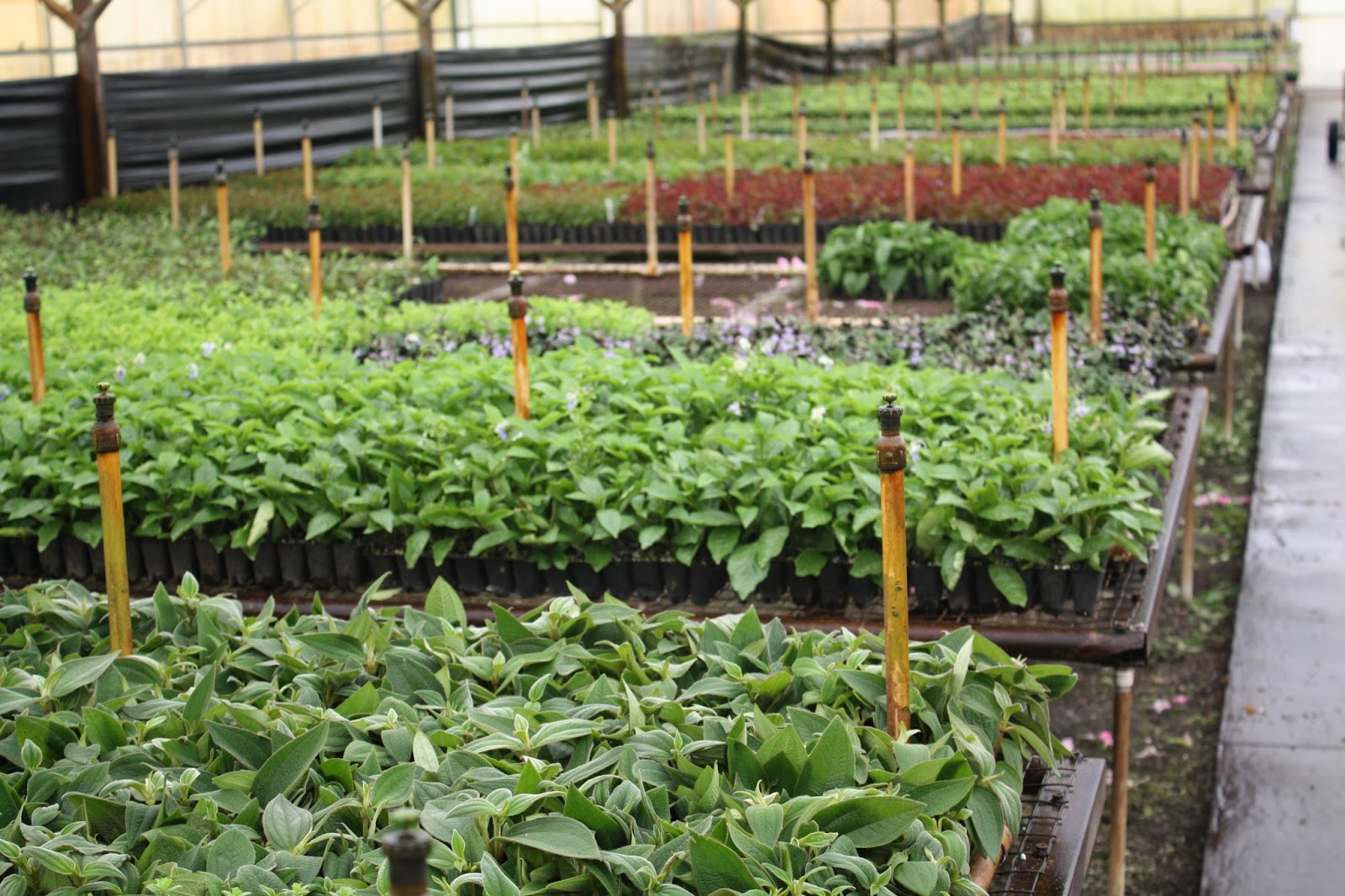 Here is a relatively new publication from Dr. Tom Yeager entitled "Helpful Details for Commercial Propagation of Woody Plant Stem Cuttings." It would be a good read for a beginning propagator or a new employee in the propagation department. This three-page fact sheet provides information for successful propagation of woody plant stem cuttings, such as sanitation, quality of cuttings, the time of year/day to take cuttings, stem size diameter and length of cutting, location of cuts/terminal bud removal, and environmental conditions. Here is the link to read the publication. http://edis.ifas.ufl.edu/pdffiles/EP/EP53600.pdf
3/27/17
New Weed Fact Sheets
Two new fact sheets have been released by UF/IFAS to help
nursery growers with problem weeds...

Biology and
Management of Goosegrass (Eleusine indica
(L.) Gaertn.) in Ornamental Plant Production
This six-page fact sheet provides information about the
biology and management of goosegrass, including preemergence and postemergence
control options. Written by Shawn Steed, Christopher Marble, Nathan S. Boyd,
Andrew MacRae, and Kiran Fnu and published by the Environmental Horticulture
Department.To check it out click on this link. http://edis.ifas.ufl.edu/ep538

Biology and
Management of Thickhead (Crassocephalum
crepidioides) in Ornamental Crop Production
Typically found in shadehouses and shaded areas of nursery
production, thickhead grows aggressively in containers and can outcompete
nursery crops for water, nutrients, and light. This erect, sparingly branched,
herbaceous annual, grows up to 4 feet tall and germinates over a wide range of
pH, salt, and temperature conditions. This four-page fact sheet describes
thickhead (Crassocephalum crepidioides)
and various methods for its control in ornamental crop production. Written by
Allison Bechtloff, Shawn Steed, Chris Marble, and Nathan Boyd and published by
the Environmental Horticulture Department.Here is the link to this fact sheet. http://edis.ifas.ufl.edu/ep534
11/17/16
WPS Changes
There are a few changes that will affect how you run your operation according to the new revisions to the Worker Protection Standard that go into effect on January 2, 2017. Things such as, your new hires that work in the field will no longer have a grace period before they are trained in WPS. They also will need to be trained annually instead of every five years. As employers, you must keep a record of training for two years.
A list of a few of the other topics where changes occur are: hazard communications, notifications of treated areas, minimum ages for handlers and early-entry workers, a new application exclusion zone, an OSHA fit-test for handlers using respirators, a medical examination for handlers using respirators, decontamination supplies, emergency assistance, the definition of enclosed space production, and the definition of immediate family. Here is a UF factsheet on the new WPS changes entitiled, "A Summary of Revision to the Worker Protection Standard - 2015 by Fred Fishel. http://edis.ifas.ufl.edu/pdffiles/PI/PI26100.pdf
A list of a few of the other topics where changes occur are: hazard communications, notifications of treated areas, minimum ages for handlers and early-entry workers, a new application exclusion zone, an OSHA fit-test for handlers using respirators, a medical examination for handlers using respirators, decontamination supplies, emergency assistance, the definition of enclosed space production, and the definition of immediate family. Here is a UF factsheet on the new WPS changes entitiled, "A Summary of Revision to the Worker Protection Standard - 2015 by Fred Fishel. http://edis.ifas.ufl.edu/pdffiles/PI/PI26100.pdf
9/23/15
A Couple of Nursery Weed Fact Sheets
Here are a couple of new factsheets on identifying two weeds, long-stalked phyllanthus and mulberry weed in ornamental production. These publications also discuss control options for ornamental producers.
Biology and Management of Long-Stalked Phyllanthus in Ornamental Crop Production
This 5-page fact sheet discusses the characteristics of long-stalked phyllanthus and explains how to control its growth in a nursery environment. Written by Theresa Chormanski, Chris Marble, and Lyn Gettys, and published by the UF Department of Environmental Horticulture, April 2015. Photo Credit Annette Chandler.
Biology and Management of Mulberry Weed (Fatoua villosa) in Ornamental Crop Production
This 4-page fact sheet discusses the characteristics of mulberry weed (Fatoua villosa) and explains how to control its growth in a nursery environment. Written by Chris Marble and Shawn Steed, and published by the UF Department of Environmental Horticulture, April 2015. Photo credit Annette Chandler.
http://edis.ifas.ufl.edu/ep517
Good Thrips?
Not all thrips are bad! Here is a great example of identifying your insects first before you spray. You might just be helping your pest enemies get a stronger foothold. The following publication helps identify a beneficial thrips that you might find in your production area that might be doing some good. These thrips eat, other pest thrips like chili thrips, spider mites, whitefly eggs and psyllid eggs. For more information please check out the new publication below.
Vespiform Thrips, Franklinothrips vespiformis Crawford, is a predatory thrips with a pantropical distribution. The distinctive red, humped-back larvae and fast-moving ant-like adults are predaceous on small arthropods. In addition to being easily mistaken for an ant, this beneficial thrips is unusual in that it constructs a silken cocoon within which it pupates. Males of this species are rare. This species is sold for use as a biological control agent in botanical gardens, zoos, interior landscapes, research greenhouses, nurseries with ornamental plants as well as outdoors in subtropical regions. This 4-page fact sheet was written by Runqian Mao, Yingfang Xiao, and Steven P. Arthurs, and published by the UF Department of Entomology and Nematology, March 2015. (Photo credit: Runqian Mao, UF/IFAS)
http://edis.ifas.ufl.edu/in1083
6/23/15
Postemergent Herbicides for Use in Ornamentals
Removal of weeds that have already germinated with herbicides requires a postemergent herbicide. Generally there are limitations to what you can spray and not also kill the plants that you are trying to grow. Here is a factsheet that might help you decide what kinds of herbicides you can add to your toolbox for dealing with weeds.

Postemergent Herbicides for Use in Ornamentals (http://edis.ifas.ufl.edu/wg059) is a 5-page fact sheet and is largely comprised of two tables: Table one lists postemergent herbicides that can be safely used over the top of some ornamentals when used according to label directions; table 2 lists postemergent herbicides that are registered for use around ornamental plants when applied as a directed spray. This factsheet was written by Jeffrey G. Norcini and Chris Marble, and published by the UF Department of Environmental Horticulture, November 2014.
Postemergent Herbicides for Use in Ornamentals (http://edis.ifas.ufl.edu/wg059) is a 5-page fact sheet and is largely comprised of two tables: Table one lists postemergent herbicides that can be safely used over the top of some ornamentals when used according to label directions; table 2 lists postemergent herbicides that are registered for use around ornamental plants when applied as a directed spray. This factsheet was written by Jeffrey G. Norcini and Chris Marble, and published by the UF Department of Environmental Horticulture, November 2014.
Subscribe to:
Posts (Atom)


 Posts
Posts

